Could You Produce the Record by Tomorrow? HVAC Compliance and Audit Readiness
The email arrives on a Tuesday afternoon. It might be a facilities manager preparing for their own audit, a tender panel asking for evidence of your maintenance regime, or an insurer following up an incident at one of your sites. The request is simple: “Please send the maintenance records for these assets for the last two years, including who attended and what was done.”
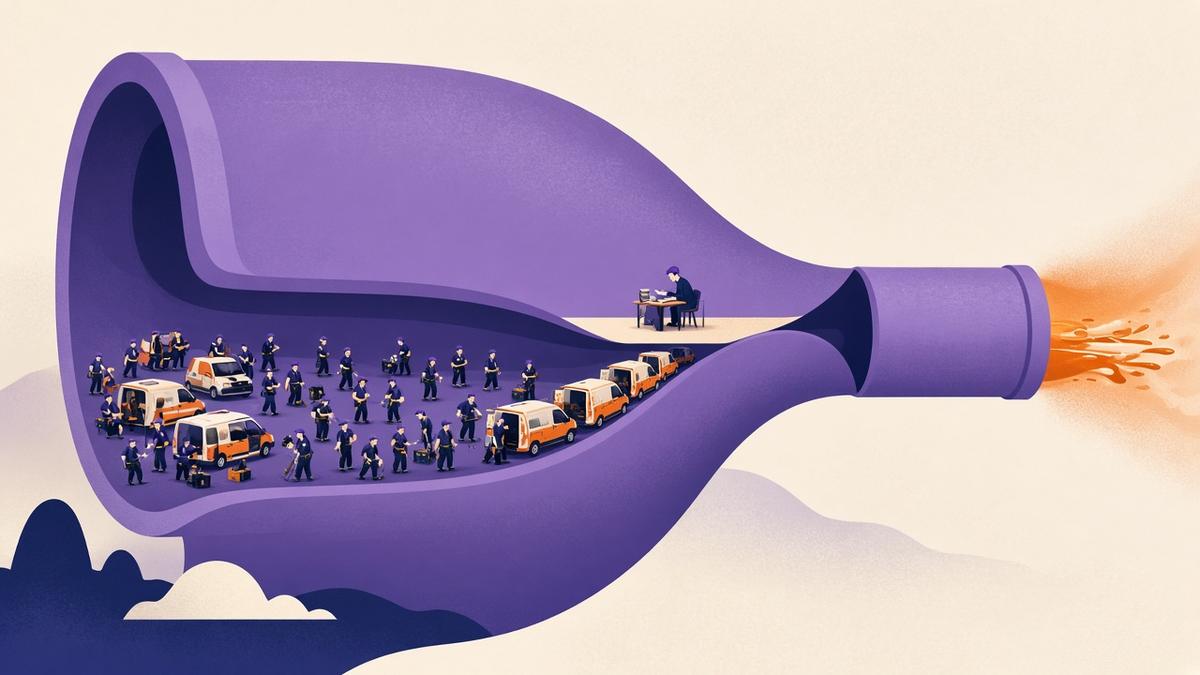
For some HVAC businesses, that’s a ten-minute job. For others, it’s three days of digging through job cards, service reports in different formats, a refrigerant log on a clipboard, and a tech’s phone photos.
The difference isn’t usually whether the work was done. It’s whether the record would stand up if someone looked closely.
This article is general information, not legal advice. Check your obligations with the relevant regulator or a qualified adviser.
The record chain an auditor follows
For any asset, on any date, an auditor or client should be able to follow a simple chain without picking up the phone:
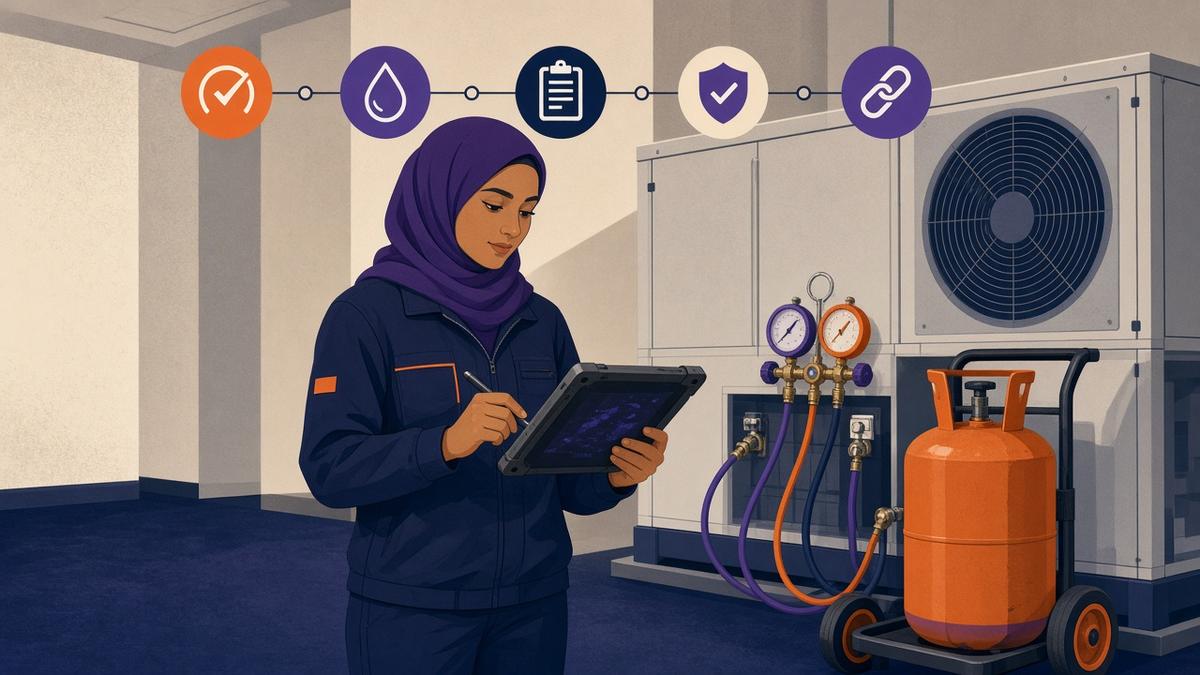
Asset (ID, location, refrigerant type and charge) → Schedule (task list and frequency, and where it came from) → Visit (who, when, how long) → Evidence (readings, photos, refrigerant log) → Sign-off (tech and customer) → Report (issued, stored, retrievable).
If any link is missing, the whole chain gets harder to defend. In a business with 30 to 80 techs, records are usually missing in the same few places.
Four places records fall apart
Maintenance records
Is every asset registered with its location, make, model, serial, refrigerant type and charge? Is each asset’s task list and frequency tied to a named source, such as the contract specification, AIRAH DA19 in Australia, ASHRAE/ACCA Standard 180 in the US, or the manufacturer? Does every visit record tasks done, readings, photos, technician and time on site? And can you see overdue and missed PM visits without building a spreadsheet?
The most common gap is the second one. The schedule exists, but nobody can say where the frequency came from. Free templates like our HVAC Preventive Maintenance Checklist and HVAC Inspection Checklist help standardise what gets recorded on every visit.
Refrigerant handling
Do you hold a current licence or certification record, with expiry date, for every tech who handles refrigerant? In Australia, that’s the Refrigerant Handling Licence from the Australian Refrigeration Council (ARC), and businesses that buy or store refrigerant need a Refrigerant Trading Authorisation. In the US, it’s EPA Section 608 technician certification. Is refrigerant added or recovered logged per asset, per visit? Can cylinders be traced from purchase to return? All of this is far easier when every unit sits in an HVAC asset management system rather than on a clipboard.
Score your records in 15 minutes. The free HVAC Compliance and Audit-Readiness Scorecard has 14 statements across maintenance, refrigerant, safety and audit trail, plus a regional reference table for AU, NZ, the US and Canada.

Safety records
Are required safety documents (SWMS, JSA, Take 5 or equivalent) completed before work starts, not after? Under the model WHS Regulations in Australia, a SWMS is required before high-risk construction work. (Victoria has its own OHS laws.) Are site inductions, tickets and plant checks for ladders, harnesses and lifts recorded and current? Do incidents and near misses go into one register that management actually reviews? Our free safe work method statement (SWMS) template and HVAC safety checklist are useful starting points.
Audit trail
This is the section that catches out businesses with good intentions. Can completed records be changed without a trace of who changed them and when? Is customer sign-off captured at the end of each visit? Can any record be found by site, asset or date in minutes? Are client reports issued on time from completed records, or retyped in the office?
A record that was retyped, edited without a trace, or produced two weeks after the visit is much harder to rely on than one captured on site. That’s what traceability in field service really comes down to.
What happens if my timesheets don’t match the award?
Pay and time records are part of the same picture. In Australia, modern awards set minimum pay, allowances and overtime, and which award applies depends on your business and the work.
If recorded hours, overtime, allowances or on-call time don’t match what the applicable award requires, you can be exposed to underpayments, back-pay and a much harder conversation with Fair Work or the relevant authority. The scorecard flags whether pay and time records would stand up to that scrutiny. It won’t calculate what you owe. For that you need current award rates and, if needed, advice from someone qualified to give it.
The practical first step is the same as for maintenance records: capture it once, at the job. When techs log hours against each job on the day, including travel, overtime and call-outs, your time records and your job records tell the same story.
Why this matters beyond the auditor
Audit readiness isn’t only about avoiding a bad day. The same records help you in three other places:
- Tenders: being able to show a clean, retrievable maintenance history is a point of difference when bidding for maintenance contracts.
- Renewals: a client who can see every visit, reading and defect across their assets has a reason to renew on more than price.
- Incidents: if something goes wrong on site, a complete, timestamped record is far better than a reconstructed one.
For the reporting side, see our compliance reporting hacks for compliance officers.
Reading your score
Each of the 14 statements scores 0 (no), 1 (partly) or 2 (yes), for a total out of 28. The bands are a self-assessment guide written for the scorecard, not an industry benchmark:
- 0 to 9, high exposure: fix the gaps in refrigerant handling and audit trail first.
- 10 to 19, partly ready: pick your three lowest lines.
- 20 to 28, audit-ready: test it with a mock audit.
Then write down your three gaps to close in the next 30 days, and who owns each one.

Small fixes, captured at the source
Most record gaps close the same way: build an asset register, give techs checklists with readings and photo prompts on site, complete SWMS on the job, capture sign-off before they leave, and generate client PM reports from completed records rather than retyping them. Whatever system you use, the test is the same: could you produce the record by tomorrow?
Download your free HVAC Compliance and Audit-Readiness Scorecard
Get the free HVAC Compliance and Audit-Readiness Scorecard. 14 statements, score bands, a regional reference table and a 30-day gap plan. General information, not legal advice. Send me the scorecard
Want to talk through your score? Book a discovery call and we’ll walk through your record-keeping gaps.
What You Should Do Now
- Book a Demo. You’ll be in touch with an automation expert who has worked in this space for over 5 years, and knows the optimal workflow to address your needs.
- If you’d like access to free articles about managing HVAC workflows, go to our blog.
- If you know someone who’d enjoy reading this page, share it with them via email, Linkedin, Twitter, or Facebook.