Why Every HVAC Business Operates Differently (And Why Your Software Should Too)

This is post 1 of 10 in our Sensible AI series for HVAC and field service businesses. Next week: How to use AI inside the software you already run.
Put two commercial HVAC businesses next to each other, each with around 50 technicians, a mix of maintenance contracts and reactive work, and an office team that starts early. From the outside they look the same. Spend a morning in each workshop and you will see they are not.
One plans the week around preventive maintenance runs, clustered by suburb, with breakdowns slotted into reserved capacity. The other is built around call-outs: the board fills as the phones ring, and planned work gets done when it can. One quotes almost everything from a pricebook and a set of standard tasks. The other builds most quotes from scratch because their sites, assets and commercial arrangements are rarely the same twice.
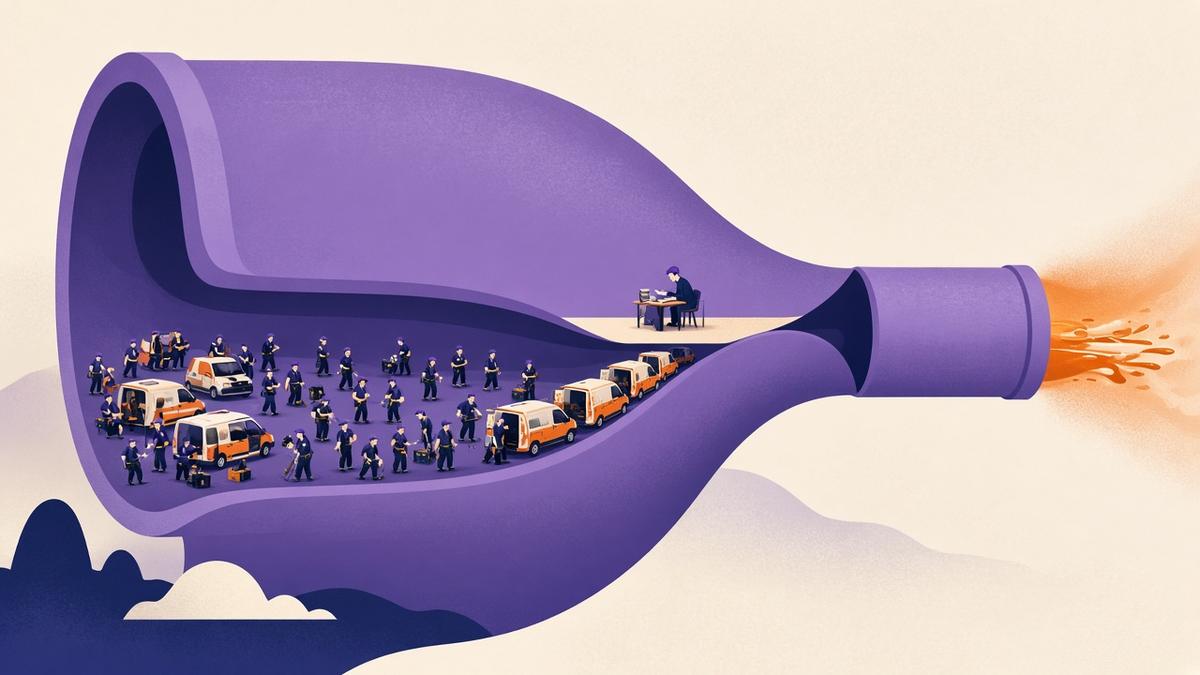
Neither is wrong. They are just different businesses. The trouble starts when the software, or the latest AI add-on, assumes there is one “right” way to run a field service operation.
The differences that actually matter
The differences that shape your day are usually practical, not philosophical.
The work mix. A business that lives on long-term maintenance contracts cares about asset registers, visit frequencies, defects found on a service, and whether a call-out is in scope. A business that lives on installs and upgrades cares about variations, claims, retentions and whether the quote still matches what was delivered. Most HVAC companies do both. The balance, and which one pays the bills, is rarely identical.
How a job gets from the phone to the van. Some teams take a call, create a job, and dispatch from a shared board. Others have account managers who own particular clients, or leading hands who sort the next day’s run themselves. If your software forces every job through a single dispatch model, someone will work around it.
What “done” looks like. For one team, done means the tech closed the job, the timesheet is against it, and the invoice can go. For another, done means a service report, a defect list, a quote for found work, and a callback window. Same trade, different finish line.
Those differences show up in job management software every day: in how you schedule, how you quote, how you capture time, and how you invoice. They also show up the moment you try to add AI on top.
Why a generic workflow fights you
Software vendors, including well-meaning ones, often sell a “best practice” process. There is value in that. You do not want to reinvent timesheets or purchase orders. But best practice is not the same as “this is how every HVAC business should run”.
When the system does not match the way your people already work, they do not suddenly change. They keep doing the job, and the system becomes something they update later, if at all. That is how you end up with timesheets filled in on Friday arvo, defects sitting in a notebook, and variations agreed on site that never reach the invoice.
AI does not fix that on its own. If you point a new tool at messy, incomplete or after-the-fact data, you just get faster versions of the same gaps. The starting point is the process you actually run, not a process somebody else thinks you should run.
When we talk to owners and ops managers about what to look for in field service software, this is usually the test that matters: can it follow your workflow, or do you have to follow it?

What sensible AI looks like in a field service business
Sensible AI, as we mean it, is not a promise to automate the business. It is the idea that any AI you add should support the way your business already operates, one workflow at a time.
In practice that means:
- Start with a real process you already have, such as entering supplier bills, turning a defect into a quote, or spotting jobs that are complete but not invoiced.
- Keep the judgement with the people who own the outcome. A tech still decides whether a unit is safe to leave. A manager still decides whether a variation is billable. AI can prepare, extract or flag. It should not quietly make the commercial or safety call.
- Measure one thing, then decide whether to go further. Time to enter a bill, time from defect found to quote sent, or the number of touches before an invoice goes out are more useful than a vague sense that “we are using AI”.
FieldInsight’s approach is to build those workflows inside the job management system you use to run the work, rather than asking you to invent a parallel process. Features such as AI Bill Scanning, KPI dashboards, and tools for retention, variations and claims only help if they sit on top of how you already quote, schedule and invoice.
We call that a sensible AI roadmap: not a list of launch dates, but a way of adding AI that respects the fact that every HVAC business operates a bit differently. The rest of this series walks through how to do that without turning the business upside down.
What this means if you already have software
If you already run job management software built for HVAC work, the question is not “should we replace it with something that has AI in the brochure?” The better questions are: which of our workflows is slow, error-prone or invisible? Can we tighten that workflow in the system we already use? And only then, can AI take a specific, bounded step off someone’s plate?
That is a more useful conversation than starting with a tool and looking for a problem to match it.

Questions we get asked
Why do HVAC businesses of the same size still need different software workflows?
Because size is not the same as operating model. The mix of maintenance and reactive work, who owns dispatch, how quotes are built, and what “done” means on a job all change the workflow. Software that cannot be configured around those differences usually gets worked around.
What is a sensible AI roadmap for a field service business?
It is a plan for adding AI to specific workflows you already run, in an order you can measure, without changing quoting, scheduling and invoicing all at once. It is not a promise of a fully automated operation, and it should not depend on features or dates that have not been confirmed.
Should we wait for AI before changing our job management software?
Usually, no. If your current system cannot hold a clean job, asset record, timesheet or invoice, AI will not save it. Get the core workflow sound first, then add AI to the steps that are genuinely repetitive. The next post in this series looks at how to use AI inside the software you already run.
Book a discovery call
If you want to talk about whether your software can follow the way your HVAC business actually operates, book a discovery call. We’ll talk through how your business works today, not a generic demo.
What You Should Do Now
- Book a Demo. You’ll be in touch with an automation expert who has worked in this space for over 5 years, and knows the optimal workflow to address your needs.
- If you’d like access to free articles about managing HVAC workflows, go to our blog.
- If you know someone who’d enjoy reading this page, share it with them via email, Linkedin, Twitter, or Facebook.